
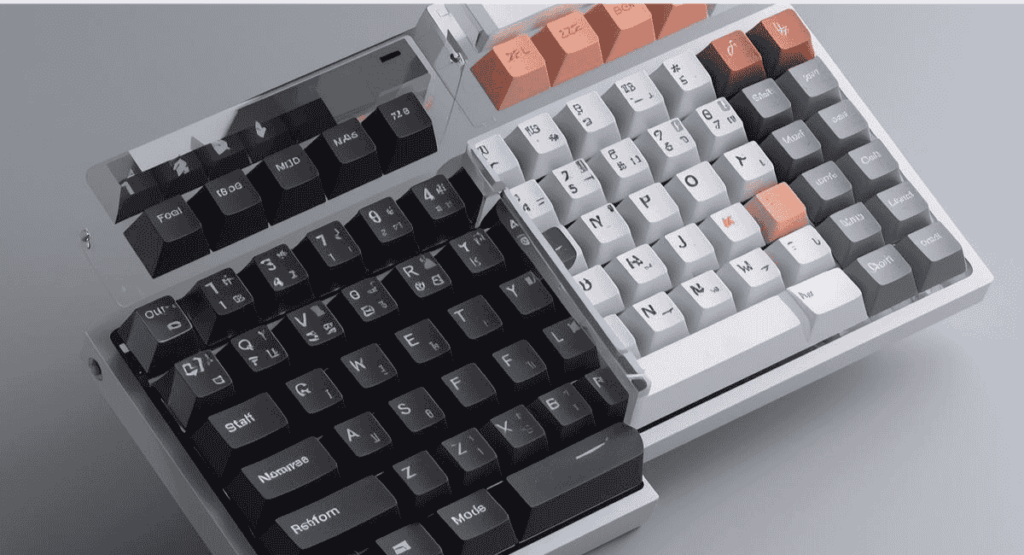
When choosing between a membrane and a mechanical keyboard, the better option depends on personal preference and how the keyboard will be used.
Membrane
Membrane keyboards are generally more affordable and quieter. They use a soft rubber layer under the keys, which makes typing feel smoother but less tactile.
Pros
They are a good choice for casual users, office work, or environments where noise should be kept to a minimum. And they are much more afordable. They are also much quieter because of their soft rubber dome design, which makes them ideal for offices, classrooms, or shared spaces. Another benefit is their lightweight and slim design. In addition, membrane keyboards are better at resisting dust and spills since their design often keeps internal components more sealed compared to mechanical keyboards.
Cons
Poor tactical feedback they usually feel “mushy” because there’s no distinct actuation point. This can make typing less satisfying and slightly less accurate, especially if you rely on feedback to know a key registered.Shorter lifespan
The rubber dome layer wears out over time, leading to inconsistent key presses or keys that stop working. They generally don’t last as long as mechanical keyboards.Slower typing response
Since you have to press the key all the way down for it to register, they can feel slower compared to mechanical switches that actuate midway. Limited key rollover
Most membrane keyboards struggle with multiple simultaneous key presses (important for gaming). You might experience “ghosting” or missed inputs. Harder to repair or customize
If something breaks, you usually replace the whole keyboard. There’s little to no customization (no switch swapping, limited modding). Inconsistent feel over time
Keys can start to feel uneven as the rubber domes degrade—some keys get softer or less responsive than others. Less premium feel
Even when they work fine, they often feel cheaper compared to mechanical keyboards.If you mainly type casually or need something quiet and inexpensive, they’re fine. But if you care about typing feel, durability, or gaming performance, their limitations become noticeable pretty quickly.
Mechanical
Mechanical keyboards, on the other hand, use individual switches under each key. This provides a more responsive and tactile typing experience. Many users, especially gamers and people who type a lot, prefer mechanical keyboards because they are more durable and accurate. They also come in different switch types, allowing users to choose between quieter or clickier key presses.
Pros
Much better typing feel
Each key has its own physical switch, so you get clear tactile feedback (and sometimes a click). That makes typing feel more precise and satisfying.Faster and more accurate typing
Because keys actuate at a specific point (you don’t have to bottom them out), you can type quicker with fewer mistakes.Extremely durable
Mechanical switches are built to last 50–100 million keystrokes, compared to a few million for membrane keyboards. Better for gaming (responsiveness)
They register inputs faster and more reliably, which helps in fast-paced games. N-key rollover & anti-ghosting
You can press multiple keys at once and all will register correctly—important for gaming and complex shortcuts.Customization options
You can swap switches, change keycaps, adjust lighting, and even program keys. It’s very flexible compared to membrane boards. More consistent over time
Keys don’t get “mushy” like rubber domes—performance stays stable even after years of use. More comfortable for long sessions
The feedback and actuation can reduce finger fatigue and improve typing rhythm.
Cons
Higher price
They’re usually much more expensive than membrane keyboards, especially if you go for well-known switches or custom builds. Noise
Many mechanical switches (especially clicky ones) are loud. Even quieter linear switches still make more noise than a typical membrane keyboard, which can annoy people nearby. Heavier and bulkier
They tend to be thicker and heavier, so they’re not as portable or minimal as slim membrane keyboards. Can feel overwhelming at first
With different switch types (linear, tactile, clicky), layouts, and features, choosing one can get confusing if you’re new. Maintenance
Dust and debris can get between keys more easily. You may need occasional cleaning, and enthusiasts sometimes go further with lubrication or part swaps. Overkill for casual use
If you only type occasionally or just browse, the benefits might not justify the cost. Potential for finger fatigue (depending on switches)
Some switches require more force to press, which can be tiring if you pick the wrong type for your typing style.
Final thoughts
In conclusion, membrane keyboards are better for those who want a quiet, budget-friendly option, while mechanical keyboards are better for users who value performance, durability, and a more satisfying typing experience.